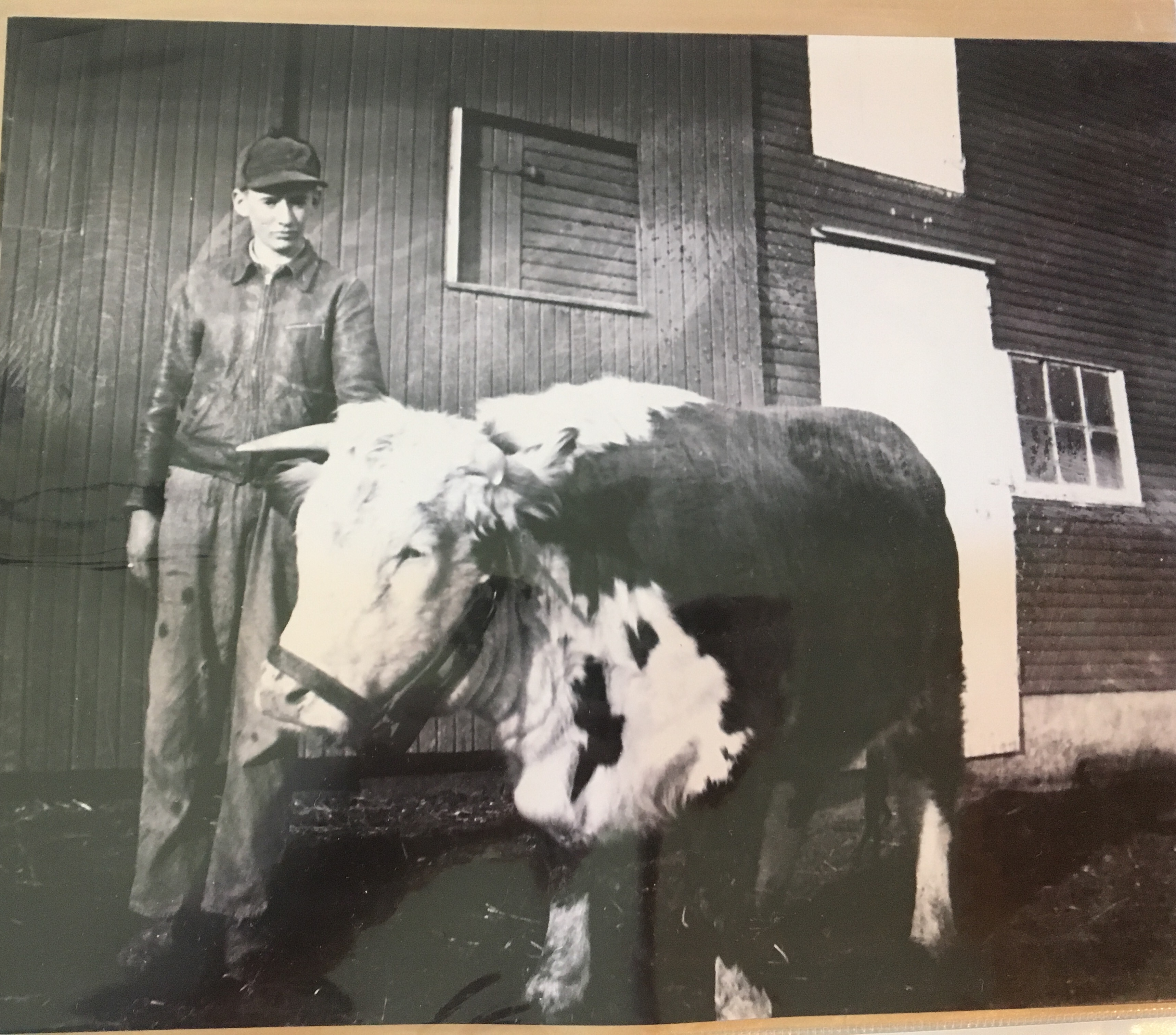
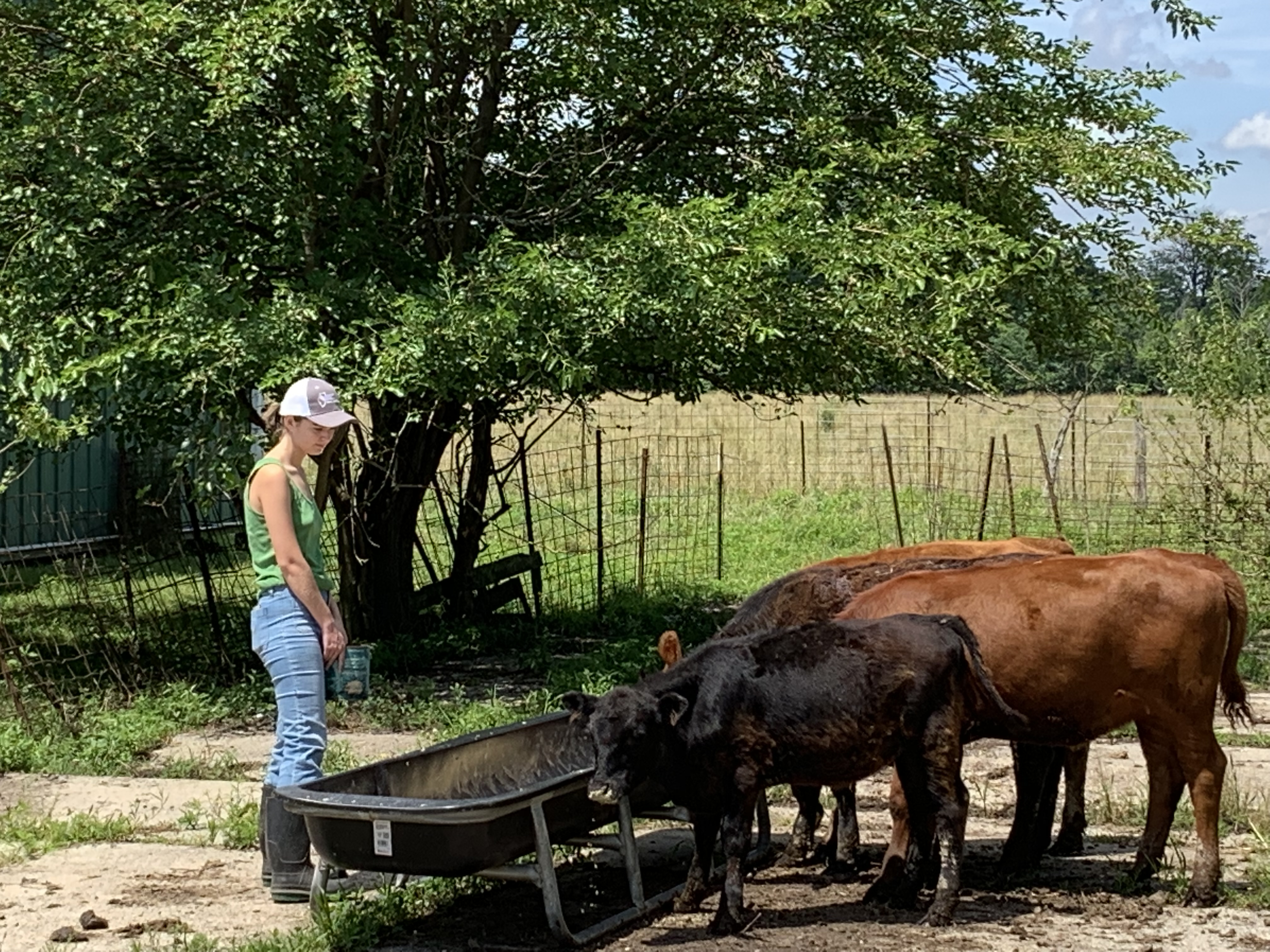
My dad grew up in rural Illinois in the small town of Marshall. Raised on the family farm, he tended to pigs, cows, chickens, and goats along with all the crops including soybeans, corn, and wheat. My uncle still does this today on Guinnip Farm. I decided to interview these two very important people in my life about my ideas to understand their opinions.
I started off asking about modern farmers and their techniques. Modern farmers have replaced tedious, labor intensive activity through modern technologies. And my uncle believes “It’s both good and bad. If you’ve ever spent hours cutting wheat or corn, row by row….you know how hard that is.” He believes modern farmers have found a way to “harness technology and find better ways to do the same things”.
I asked whether they believed this is detrimental because so much of tradition is being forgotten. A response was “…the world moves on, technology advances…you may be sentimental, but the world moves on and the world wants efficiency”. They related this back to life in the Midwest by discussing how tradition and modern life is still present. “[Modern farmers] want it easier than what their parents had…most people don’t want to work out in a field all day.” My uncle also discussed how consumers affect modern techniques. “Organic” has grown a lot in recent times but “organic means labor intensive and inefficient.” People now want part of the old, but safer and this creates less efficiency. “As the population grows, land decreases and we don’t have enough resources to feed these lifestyles.” He expressed the importance of realizing that most of our society does not have the economic capability to live that way.
They then related this problem to the world, “the conversation would be different in China, in the Midwest, in California, in Europe…the world marches on. Technology is leading every society, and it’s not going to stop” One of the best statements I received from the interview was from my uncle saying that all societies are going to be totally different, “you have to have principles, but don’t get too caught up on methods.”
The conversation came back to how most modern technologies are based on old methods and it just comes down to working ethics and wants of the public. It depends on the audience. People want quality food as cheap as they can get it. “Society has traded time and lifestyle for traditional methods.” Needs are different now, and health and diet are placed before energy and time. But some of the methods we have adopted are in the name of sustainability “soil runoff was not managed, but now we have come to understand drainage and erosion prevention. We have made a lot of advances by getting smarter. Technologies are used where they fit in.” My uncle capitalized on this idea that we cannot satisfy all of society and “society has a hard time coming up with likable solutions to problems”.
When I asked “Do you think these methods and technologies are making people think about food production less?” My uncle responded saying “[people] listen to 30 second bites and believe they’re true, written by someone who doesn’t know what’s going on. Most people don’t take enough time to learn both sides and become educated.” I also asked if he believes is making farming a dying and less desired profession which he responded to saying “The notion of going on the field and spending 10 hour days is not a lifestyle most people want, but it’s gonna be changed by technology. We have tremendous research potential.” This related to my ideas about agricultural education in which farmers are trained and research is disseminated.
Overall this interview not only helped me to further develop my ideas, but also better understand them and strengthen my argument. I enjoyed discussing my ideas with people who I am extremely close with who are also very experienced in this field of information.
 Maria's Mind