This is my new blog! I have created this for a writing class focused on food and identity, so read along as I dive into different topics within this inquiry. Stay tuned for updates and new content!
This is my new blog! I have created this for a writing class focused on food and identity, so read along as I dive into different topics within this inquiry. Stay tuned for updates and new content!
Throughout this class my ideas have developed from simple statements about my heritage and relationship with food into research projects and deep dives into topics I wanted to learn more about including food production, modern farming techniques, sound and taste, the development of infant’s palates, and more. The blog format, along with various challenging prompts, allowed me to venture beyond my simple ideas and delve into my relationship with food in different ways with each post. I made significant changes throughout the class to a few of my posts including my Recipe As a Narrative Artifact, PSA, and Critical Summaries Portfolio reflections. After receiving critiques in comments and grading to lengthen some of my reflections, I revised them and went more in depth.
I have learned a lot about the world’s relationship with food, which has helped me better understand my own. And, this class also helped me realize how genuinely interested I am in food studies and has encouraged me learn more about opportunities surrounding it. I now see agricultural journalism as a very viable career option for me.
Source 1: “Growing Up: How Vertical Farming Works” by The B1M
In The B1M’s informational video “Growing Up: How Vertical Farming Works”, the benefits and challenges of the technique of vertical farming are discussed. One of the greatest challenges for modern farmers and food producers is being able to provide enough food for everyone in a sustainable, efficient, and cost-effective way. This video displays vertical farming as the future of food production through a variety of statistics, facts, and opinions.
The need for food has increased while space to grow it has decreased. And, while many modern techniques enhance production rates, they create environmental challenges like habitat clearing and soil degradation which put the planet’s resources in danger. This, combined with changing climate disrupting seasonal weather patterns, have cleared the way for vertical farming to take over.
Vertical farms have condensed production spaces into much smaller factory-like sites in enclosed environments where factors such as lighting, temperature, soil conditions, and nutrients can be easily controlled. In these structures, food is produced in vertically stacked layers or vertical surfaces that allow for reduced water usage and optimal levels of nutrients. The video presents this technique as not only more efficient, but also more environmentally beneficial as many of these farms are powered by renewable technologies and recycle their resources. They also eliminate the need for harmful pesticides due to lack of birds and insects, which creates a better quality product. And, as stated in the video, “Some [of these farms] are even able to yield 50 to 100 times greater than a traditional crop farm.”
As discussed throughout the video, cost and availability can be challenging, but this technique can make food more accessible and less expensive, solving many of the issues we are faced with today.
Source 2: The Agricultural Sustainability Institute at UC Davis
https://asi.ucdavis.edu/programs/ucsarep/about/what-is-sustainable-agriculture
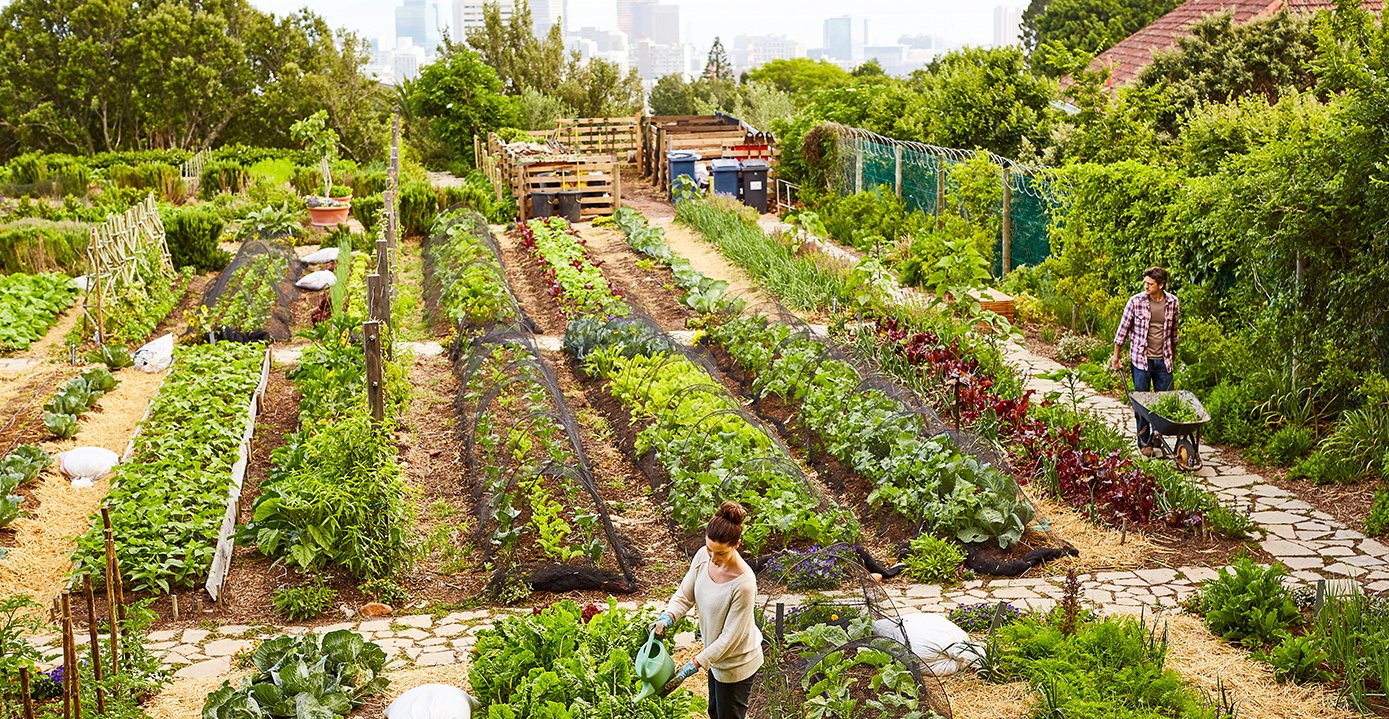
This source is a college page describing the Agricultural Sustainability Institute at UC Davis and the work they do within the Sustainable Agriculture Research and Education Program. This page presents the goal of sustainable agriculture to be “meet[ing] society’s food and textile needs in the present without compromising the ability of future generations to meet their own needs”, which is bolstered by main objectives such as a healthy environment, economic profitability, and social and economic equality. These ideals reinforce my ideas that modern farming is about remaining profitable yet ethical in making decisions, while also pushing for a better earth for us and future generations. I wanted to include this source because it describes the education modern and future farmers are receiving. This page not only describes the overall education received, but also gives a list of specific topics in sustainable agriculture such as Addressing Food Insecurity, Controlled Environment Agriculture, Cover Crops, Dairy Waste Management, and more.
As you scroll past programs and topics, you reach a display that further delves into the Philosophy and Practices of Sustainable Agriculture. It provides information regarding historical context, various natural and farming resources, plant and animal production processes, and the economic, social, and political context of sustainable farming. Each of these topics discuss multiple strategies being taught to future farmers that will be implemented along with the importance of each.
This page not only presents the importance of sustainable farming and all of its components, but also the importance of the education of food producers. It explains the topics and strategies being taught to our food producers which will eventually be implemented and affect all of us, which I believe is very important
Source 3: The Call of the Land: Meet the Next Generation of Farmers
For this source, I created a collage to highlight its content
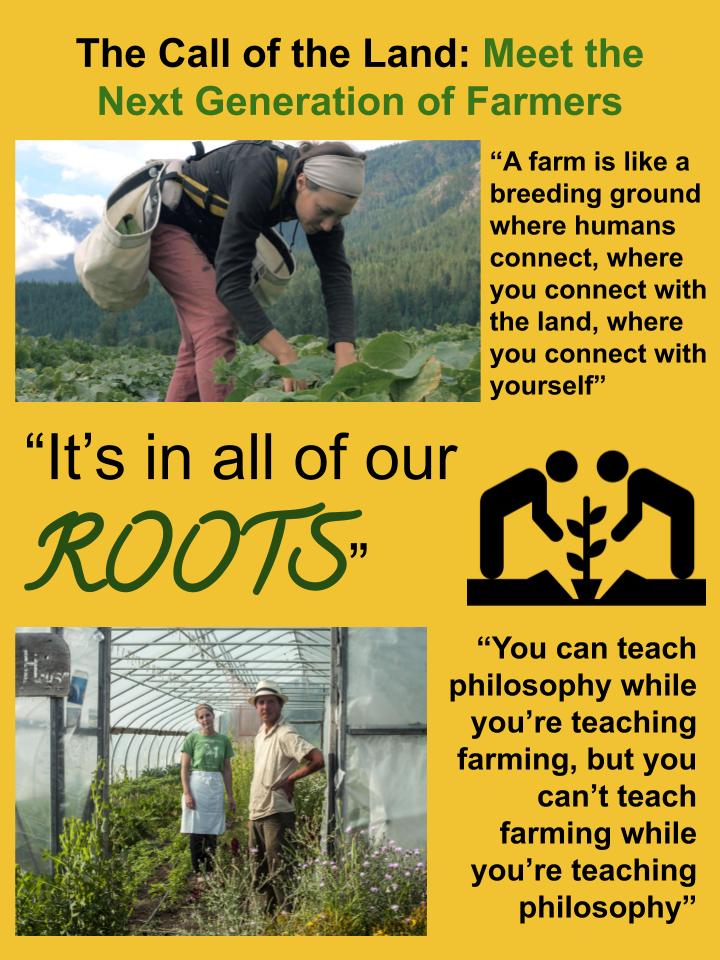
This project was a bit overwhelming for me. Once I completely wrote out my summaries and started to adjust to the main ideas it became easier to understand and complete the assignment. While I was daunted at first, I knew what topic I wanted to research and was excited to do so. In the beginning, I struggled with conveying my message, but once I found a fews sources I really liked it came together. I first found the National Geographic source documenting various modern farmers, but I was not sure if I wanted to use it. I then got the idea to research different techniques and affects of modern farming. This is when I discovered my source, which was an informational video, about vertical farming and decided to learn more about it. From here I also researched sustainable farming and came across a descriptive page of the sustainable agriculture program at UC Davis. This was a source I really wanted to use because it not only described various aspects of sustainable farming, but also the ways in which modern farmers are educated. This made me more eager to use my National Geographic source to wrap up the passion and work of modern farmers. In the end, I really enjoyed this project with the topic I chose. I believe that this format really let me dive into research about something I am extremely interested in and present it in a new way to my peers. I chose a variety of sources of different genres such as an informational video, a short documentary, and a college page. I believe that through these sources I was able to present my ideas in a more clear and understandable way.
My dad grew up in rural Illinois in the small town of Marshall. Raised on the family farm, he tended to pigs, cows, chickens, and goats along with all the crops including soybeans, corn, and wheat. My uncle still does this today on Guinnip Farm. I decided to interview these two very important people in my life about my ideas to understand their opinions.
I started off asking about modern farmers and their techniques. Modern farmers have replaced tedious, labor intensive activity through modern technologies. And my uncle believes “It’s both good and bad. If you’ve ever spent hours cutting wheat or corn, row by row….you know how hard that is.” He believes modern farmers have found a way to “harness technology and find better ways to do the same things”.
I asked whether they believed this is detrimental because so much of tradition is being forgotten. A response was “…the world moves on, technology advances…you may be sentimental, but the world moves on and the world wants efficiency”. They related this back to life in the Midwest by discussing how tradition and modern life is still present. “[Modern farmers] want it easier than what their parents had…most people don’t want to work out in a field all day.” My uncle also discussed how consumers affect modern techniques. “Organic” has grown a lot in recent times but “organic means labor intensive and inefficient.” People now want part of the old, but safer and this creates less efficiency. “As the population grows, land decreases and we don’t have enough resources to feed these lifestyles.” He expressed the importance of realizing that most of our society does not have the economic capability to live that way.
They then related this problem to the world, “the conversation would be different in China, in the Midwest, in California, in Europe…the world marches on. Technology is leading every society, and it’s not going to stop” One of the best statements I received from the interview was from my uncle saying that all societies are going to be totally different, “you have to have principles, but don’t get too caught up on methods.”
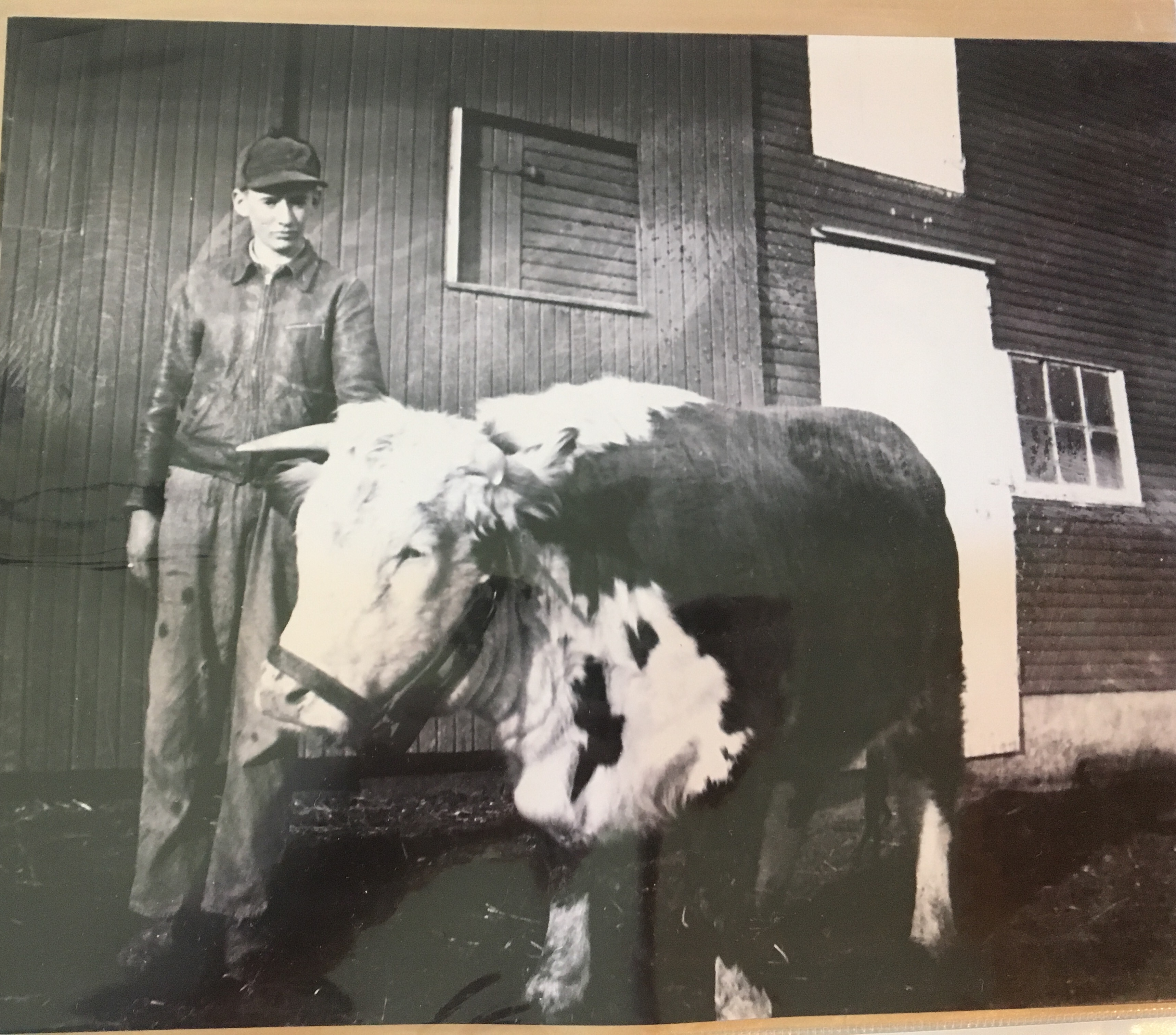
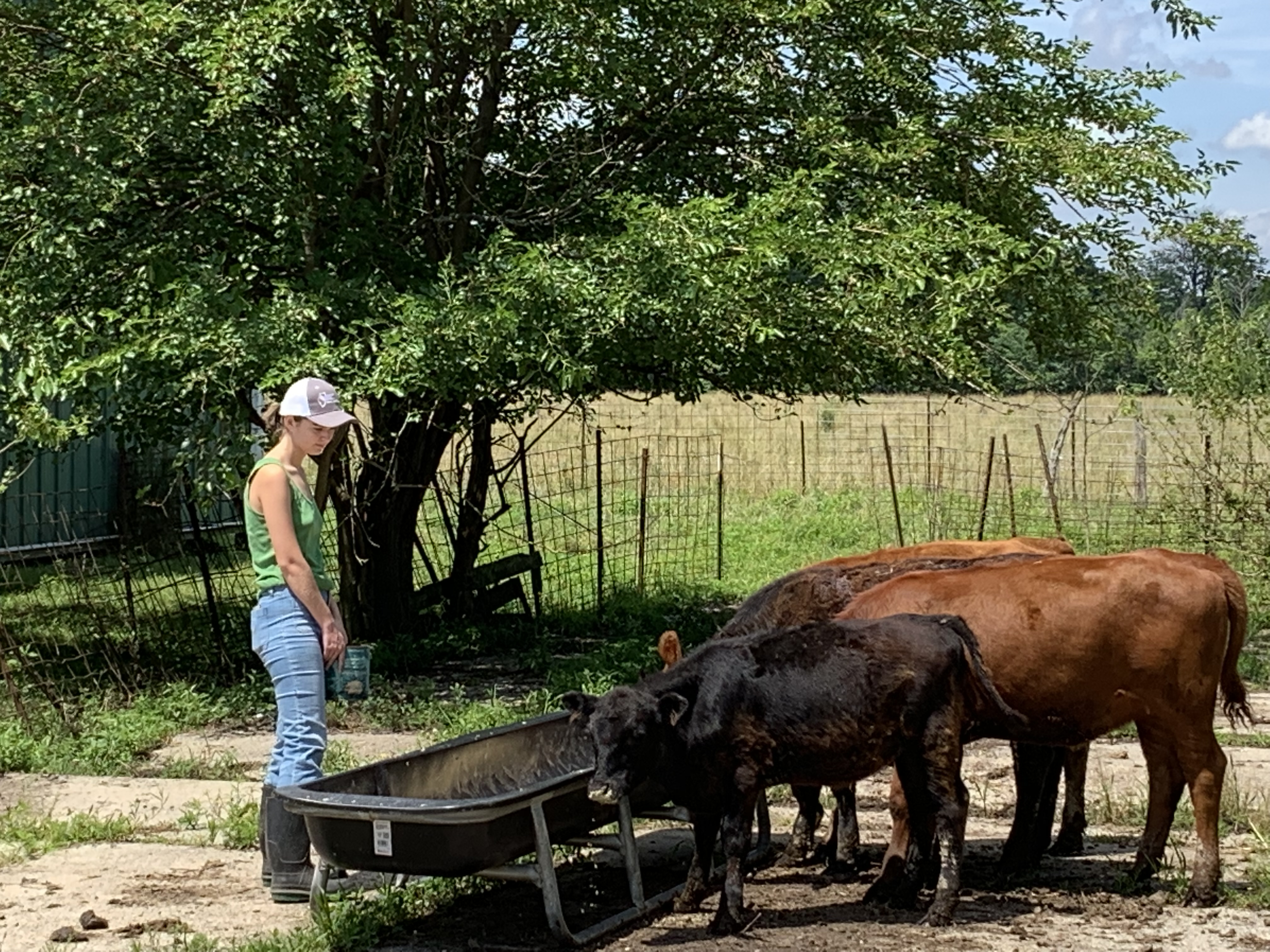
The conversation came back to how most modern technologies are based on old methods and it just comes down to working ethics and wants of the public. It depends on the audience. People want quality food as cheap as they can get it. “Society has traded time and lifestyle for traditional methods.” Needs are different now, and health and diet are placed before energy and time. But some of the methods we have adopted are in the name of sustainability “soil runoff was not managed, but now we have come to understand drainage and erosion prevention. We have made a lot of advances by getting smarter. Technologies are used where they fit in.” My uncle capitalized on this idea that we cannot satisfy all of society and “society has a hard time coming up with likable solutions to problems”.
When I asked “Do you think these methods and technologies are making people think about food production less?” My uncle responded saying “[people] listen to 30 second bites and believe they’re true, written by someone who doesn’t know what’s going on. Most people don’t take enough time to learn both sides and become educated.” I also asked if he believes is making farming a dying and less desired profession which he responded to saying “The notion of going on the field and spending 10 hour days is not a lifestyle most people want, but it’s gonna be changed by technology. We have tremendous research potential.” This related to my ideas about agricultural education in which farmers are trained and research is disseminated.
Overall this interview not only helped me to further develop my ideas, but also better understand them and strengthen my argument. I enjoyed discussing my ideas with people who I am extremely close with who are also very experienced in this field of information.
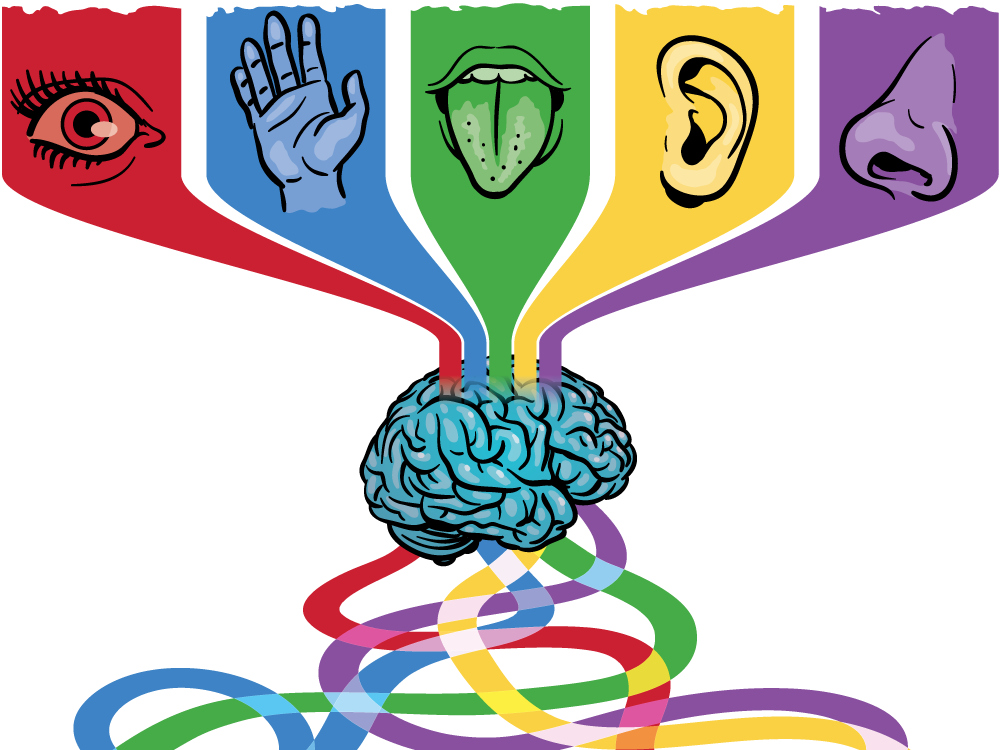
I chose the article, “Does Sound Affect the Way We Taste?” by Chau Tu from ScienceFriday (https://www.sciencefriday.com/articles/does-sound-affect-the-way-we-taste/).
I chose two articles about different topics related to food with similar layouts that I believe reinforce one another. The first article I read was “How to feed the world without destroying the planet” by Stephen Leahy from National Geographic (https://www.nationalgeographic.com/environment/2019/07/how-to-feed-the-world-without-destroying-the-planet/). This article discussed the drastic changes farmers are needing to make in order to keep up with the booming population while also improving people’s diets and preserving the land we live on. It follows a bulleted/listed format like the second article I read, “I am a US cattle rancher. What do you want to know?” by Amelia Kent for The Guardian (https://www.theguardian.com/commentisfree/2013/jul/15/cattle-ranch-job-daily-life). The second article I read discussed the everyday life, struggles, and experiences of ranching while referencing the circumstances of the food industry.
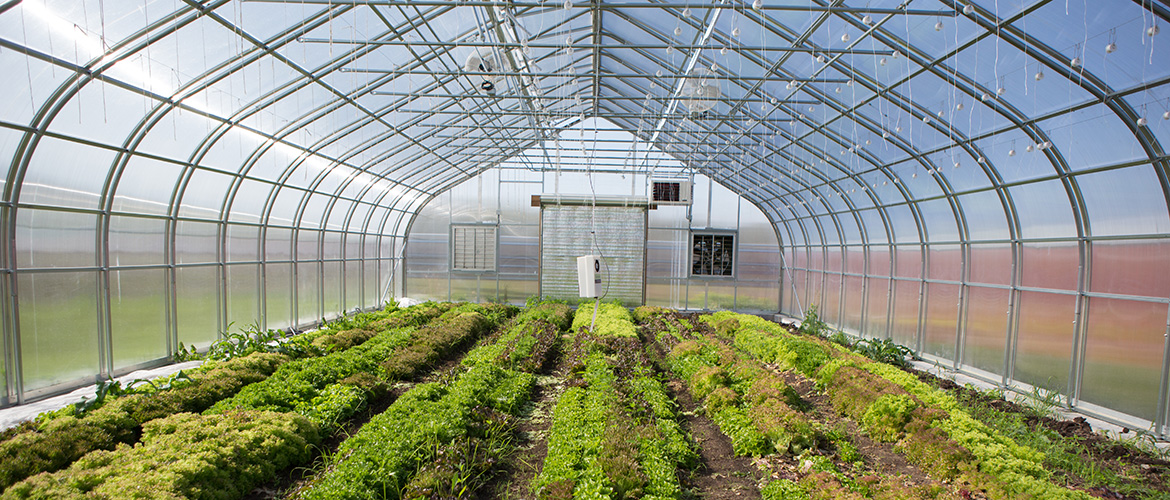
Both of these articles brought awareness to how much consumers affect the food industry and, not only, the wage of farmers and ranchers, but also the well being of the earth and the people that tend it. While the first article focused on the environmental side of farming, ranching, and the overall food industry, the second provides the perspective of a hardworking rancher. I believe these balance each other very well and provide a wholistic perspective of food production and consumption. I saw this most in the first article when Leahy quoted Danielle Nierenberg saying, “Many of these [ concrete messages and useful ideas] are things we can do now to move to sustainable food production and things that will create more jobs and economic growth.” and in the second article when Kent writes, “[Ranchers] don’t have an annual salary given that our farm income is entirely derived from the commodity market.”
Through my PSA I was trying to communicate how under-gratified farmers and ranchers are. People have become completely unaware of how their meals come to be. I want people to be more grateful and aware of food production and agriculture because I believe it is a pivotal part of society. A lot of articles I read, especially one from the Washington Post (https://www.washingtonpost.com/news/wonk/wp/2018/05/02/why-farmers-only-get-7-8-cents-of-every-dollar-americans-spend-on-food/?noredirect=on&utm_term=.4a5d82a0606c), helped me flesh out my ideas. They also helped me formulate new ones by presenting facts such as how much of our everyday products are byproducts of food produced by farmers and ranchers. I really liked creating this project as a video PSA. I researched a topic I am very interested in and, through this, I was able to use media I created and combine it with informational components to present a creative video. I am a perfectionist when it comes to projects like this, so it was hard for me to stop tweaking it. But, I had a lot of fun playing with different techniques and media. This project helped me explore video work and editing which I really enjoyed. I think I did a pretty good job at presenting a convincing argument because I used surprising statistics and combined them with impactful visuals. I also related my PSA back to my life through a personal connection with farming, which I believe strengthened my argument.
Above I have posted a Dorito ads from the Super Bowl. In this brief commercial a couple is at the doctor’s office receiving an ultrasound. This sentimental moment is turned humorous as the father begins eating Doritos. He notices that as he moves the chip in his hand, the fetus moves to follow it. He finds this funny and begins moving the chip more excessively until the baby hits the mother. The mother then gets angry and throws the Dorito across the room, causing the baby to be born earlier as it follows the Dorito out of the womb. Throughout the video the iconic Doritos bag is shown to the camera and the crunches are intensified. With every bite you are made to want the chips more. The husband is enjoying his Doritos and the unborn fetus wants them too, so they must be good. While this ad is ridiculous, it shows the humorous approach that Doritos takes in advertising to appeal to a certain audience.
I shared my graphic novel with my friend Harris who was in the World Urban Geography program at Syracuse, but left this past weekend. Sharing this with him gave me the opportunity to get another perspective while also staying in touch. He thought that my graphic novel page was really interesting because he has also heard similar stories from his mother. He elaborated saying that “[his] mom always craved fried calamari and it is still one of [his] favorite foods today.” He found this relationship funny because food traveled to him, through his mother, and yet his body still remembers it. He enjoyed my interpretation of it saying, “When you turn a biological process into a narrative, it adds life to it.” I really appreciate hearing someone else’s perspective, especially someone not in a writing class. He was honest with me while also providing feedback I had never heard, like the “adding life to a biological process”. I liked the final product of my graphic novel page and absorbing all of the feedback from my peers and friends was rewarding and interesting. I do not usually like sharing my writing or art with others, so the fact that I did both in my graphic novel page was a big step. The blog project as a whole along with all of the positive feedback I have been receiving is making me more confident and more eager to produce and share with the world around me.
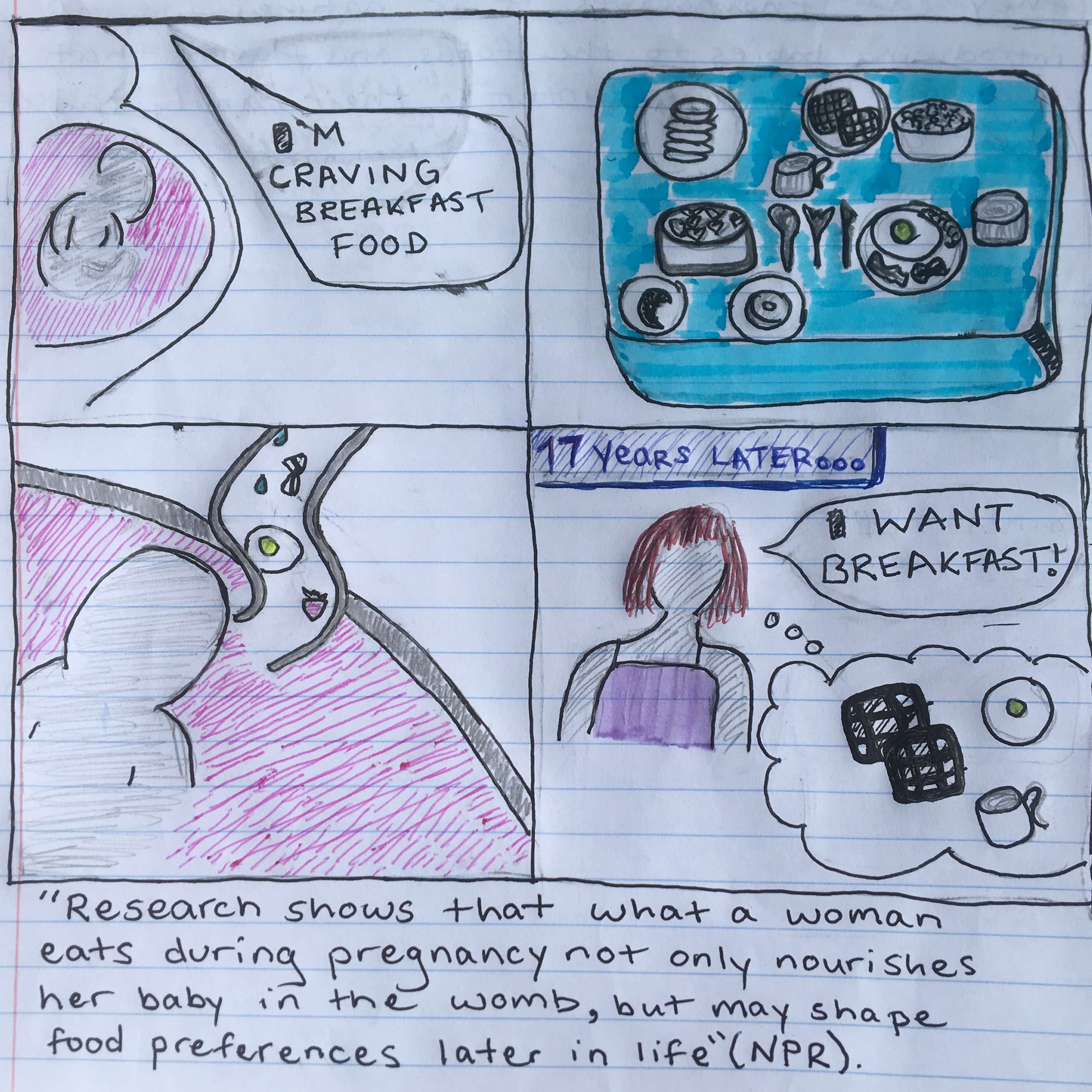
At this point in class, I see my most exciting ideas relating to multicultural foods and how identity and food affects relationships. I explored my relationship with food and heritage in my Recipe As A Narrative Artifact project and continued to expand through my freewrites and reflections. In this project I drifted more towards my personal relationships, specifically with my mother. I really love breakfast foods such as pancakes, waffles, cereal, coffee, pastries, etc., and she has always told me it is because when she was pregnant with me she always craved breakfast foods. I decided to read a few articles, including one from NPR (https://www.npr.org/2011/08/08/139033757/babys-palate-and-food-memories-shaped-before-birth), that discussed the development of a baby’s palate and how food memories are shaped before birth. Once I gained more knowledge about this topic, I decided to share my story through this comic. I really liked the graphic novel format in this situation because I feel like I was able to communicate my ideas more clearly through the use of visuals and words. Everything that I read about the development of a baby’s palate helped me to better understand characteristics I developed on my own versus ones I was taught.
The clip from Munchie‘s that I watched, “Action Bronson Made A Beer” displayed Bronson’s relationship with beer, food, and culture through his new recipe. The main argument that I saw appeared in the beginning with Bronson discussing how he does not normally like beer, and how people with different preferences can still collaborate and make successful products. Since Bronson does not usually like beer, he took flavors he knew he liked and combined them with the help of his neighbor to create the perfect beer for his palette. After expressing himself in the recipe, he threw a launch party featuring his favorite food and music to display his strong relationship with culture. This clip informs the audience that liking unique flavors and having different preferences is not a bad thing, but rather can spark great ideas for you and others to enjoy. This video argues that beer can be made in an unconventional way and still be enjoyed by many. Food and drink habits depend on the person and Bronson showed that in this video.
 Maria's Mind